Pen Peptide
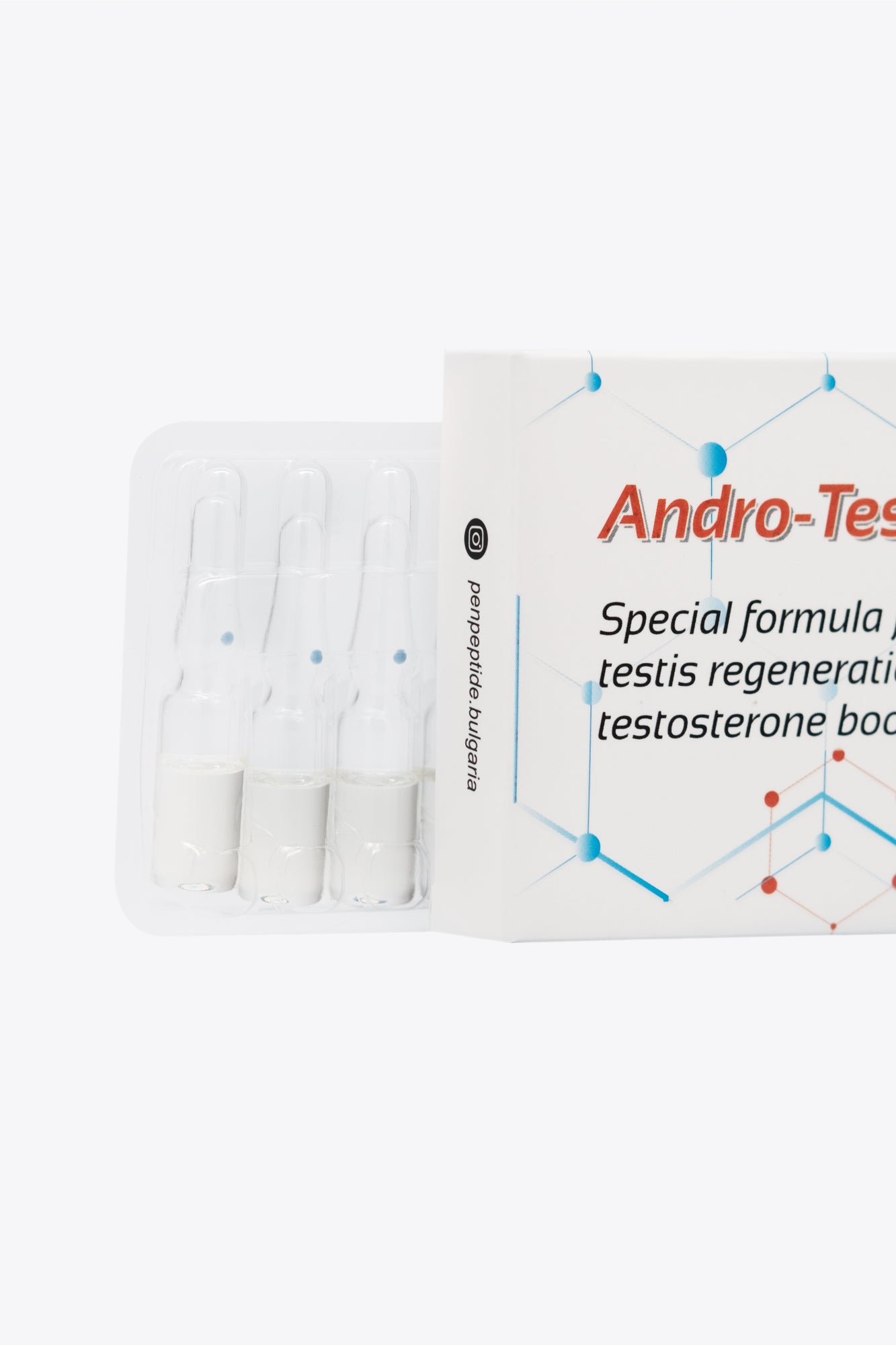
Andro-Testis Recovery | 10 amp. x 1 ml for supporting the body’s own testosterone production
Andro-Testis Recovery | 10 amp. x 1 ml for supporting the body’s own testosterone production
Couldn't load pickup availability
Andro-Testis Recovery is a targeted research formula developed for studies related to testosterone regulation and overall male endocrine function. The combination of testicular and placental extracts, steroidal precursors, and antioxidant molecules provides a multidirectional profile of interest in research on steroidogenesis, testicular activity, cellular energetics, and protection against oxidative stress. The formula encompasses key biological mechanisms — from supporting the androgen axis to modulating mitochondrial and antioxidant processes.
Composition of Andro-Testis Recovery:
- Beef/Sheep Testicular Extract (Extractum Testiculorum) – 0.2 ml
- Enclomiphene – 1.5 mg
- Placenta Extract (Extractum Placentae) – 0.1 ml
- Deer Antler Oil – 0.05 ml
- Phosphatidylserine (Phosphatidylserinum) – 20 mg (~0.05 ml)
- DHEA (Dehydroepiandrosterone) – 10 mg (~0.05 ml)
- Coenzyme Q10 – 5 mg (~0.05 ml)
- Vitamin E (Tocopherol) – 0.1 ml
- Vegetable Oil (MCT, evening primrose, grape) – up to 1 ml
- SAMe (S-adenosylmethionine) – 3 mg
- Zinc Picolinate (Zincum picolinicum) – 1 mg
- Astaxanthin (Astaxanthinum) – 2 mg
- ATX 304 (AMPK activator) – 15 mg (~0.05 ml)
What may be the benefits of Andro-Testis Recovery?
- Support for physiological processes related to testosterone production: The testicular extract (Extractum Testiculorum) contains natural biological fractions that scientific literature suggests may participate in steroidogenesis — the process by which the testes synthesize androgens, including testosterone.
- Support of the hypothalamic–pituitary–gonadal (HPG) axis: Enclomiphene is widely studied for its role in regulating LH and FSH — two key hormones influencing testicular function and natural hormonal balance mechanisms.
- Biochemical precursors involved in androgen biosynthesis: DHEA (Dehydroepiandrosterone) is a steroid precursor participating in pathways leading to androgen synthesis. Its presence in the formula is of interest in research focused on hormonal dynamics.
- Support for testicular cellular health: Antioxidants such as CoQ10, vitamin E, and astaxanthin are studied for their impact on oxidative stress — a factor relevant to Leydig cells, which are responsible for testosterone production.
- Potential influence on stress adaptation: Phosphatidylserine is traditionally researched for its role in cortisol regulation. Maintaining a stable cortisol profile can indirectly influence hormonal balance, including androgen status.
- Support for tissue nourishment and regeneration: Placenta extract contains nutrients and bioactive molecules of interest in research related to cellular recovery — an important aspect of the structural and functional maintenance of the testes.
- Metabolic factors related to hormonal activity: ATX-304 (AMPK activator) participates in regulating cellular energy balance. Cellular energy status is essential for optimal steroidogenesis.
- Support for liver metabolic processes: SAMe participates in methylation and detoxification pathways in the liver.
- Improvement of overall lipid profile (research context): DHEA, phosphatidylserine, and AMPK modulation have been studied in the context of metabolic health and lipid metabolism, making the complex applicable in broader metabolic models.
- Potential influence on adaptation to physical exertion: Antioxidants + AMPK activator + extracts → create a profile relevant to research on post-exertion recovery, increased free radical production, and cellular fatigue.
Proper administration and dosage of Andro-Testis Recovery:
It is administered slowly — intramuscularly, typically 2 to 3 ampoules per week (one per administration), depending on the specifics of the research protocol.
Share